Brain and Intelligence Lunch Seminar NO.39


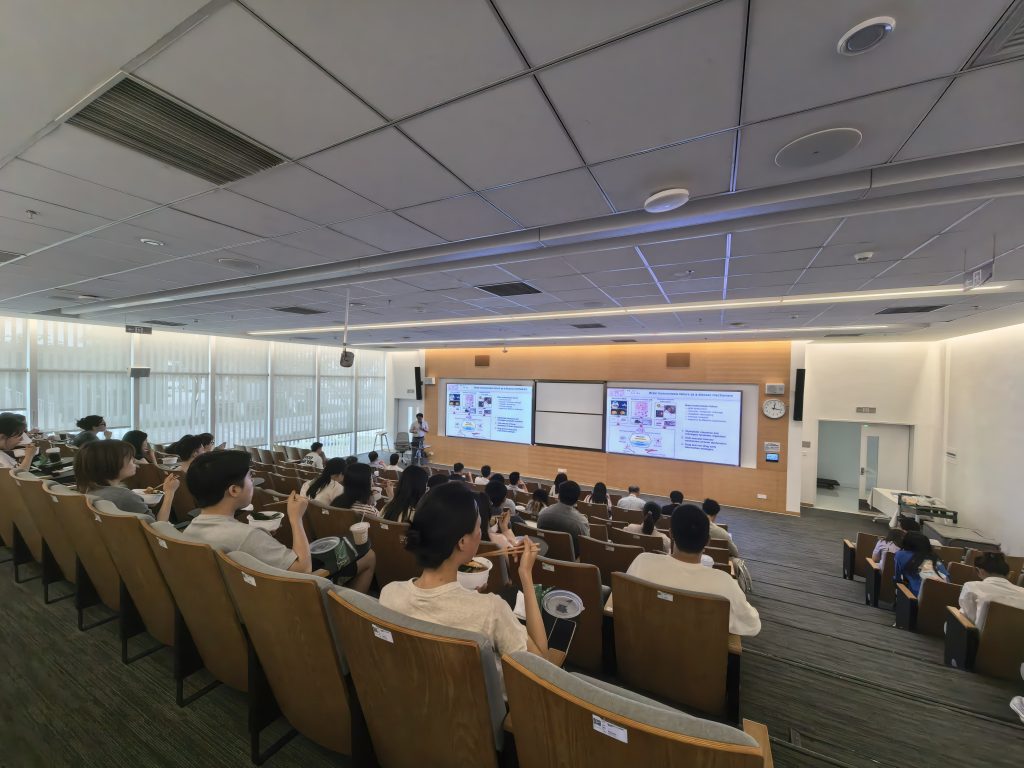
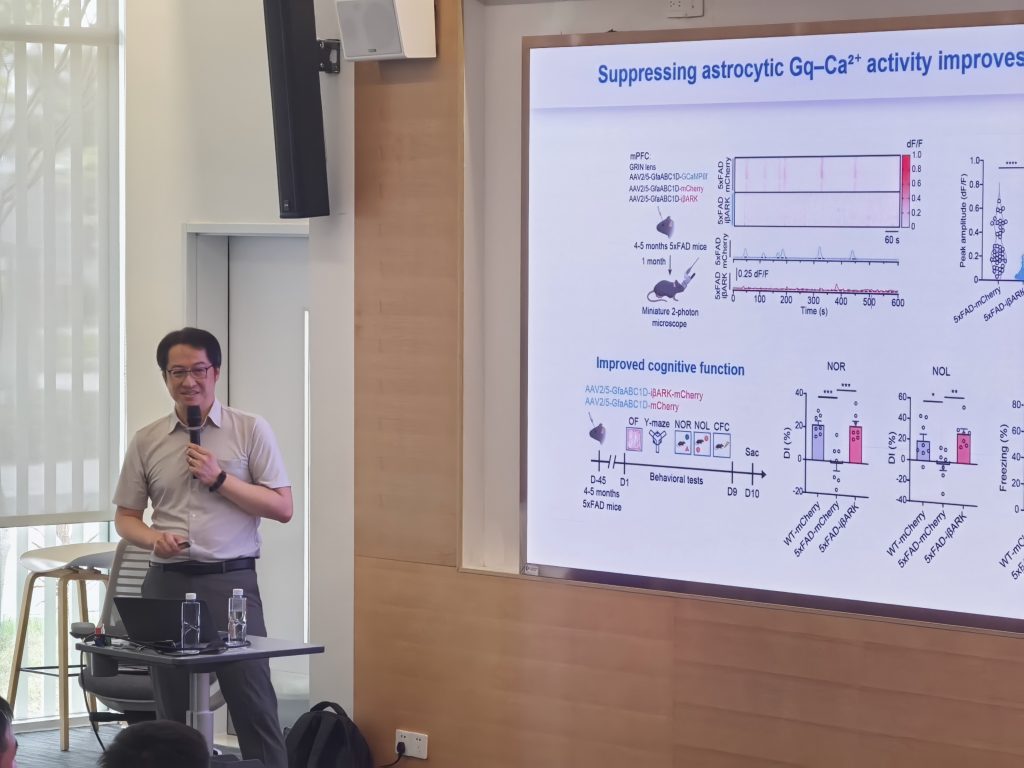
On May 13, the 39th Brain and Intelligence Lunch Seminar was successfully held. Dr. Lin Wei-Jye, an Associate Research Fellow and Principal Investigator at the Center for Basic and Translational Medicine Research and Brain Research Center, Sun Yat-sen Memorial Hospital, delivered a lecture entitled "Targeting Brain Clearance in Alzheimer's Disease: From Astrocytic Dysfunction to Early Intervention Strategies."
Dr. Lin’s lab has long been dedicated to basic and translational research on neuropsychiatric disorders, focusing on the pathogenesis and intervention strategies for Alzheimer's disease (AD), depression, and radiation-induced brain injury. His research integrates neural circuit modulation, multi-omics analysis, and combined non-pharmacological and pharmacological approaches, establishing a systematic framework from animal models to clinical validation.
In this talk, Dr. Lin addressed a central question in early AD pathology: impaired brain clearance. He noted that the glymphatic system and meningeal lymphatic drainage pathways are essential for eliminating metabolic waste from the brain, with the polarized distribution of aquaporin-4 (AQP4) on astrocytic endfeet being critical for efficient cerebrospinal fluid-interstitial fluid exchange. However, the upstream mechanisms driving early-stage clearance dysfunction have remained unclear.
Dr. Lin's team recently discovered that in early AD, Aβ oligomers induce abnormally elevated Ca²⁺ activity in astrocytes of the medial prefrontal cortex. This aberrant Ca²⁺ signaling activates an astrocyte-intrinsic cholesterol synthesis program, leading to lipid raft-mediated AQP4 internalization and lysosomal relocalization, thereby disrupting AQP4 polarity, impairing glymphatic clearance, and accelerating cognitive decline.
Based on this mechanistic insight, Dr. Lin discussed potential early intervention strategies. The study demonstrated that pharmacological lowering of astrocytic cholesterol (e.g., with atorvastatin) or genetic knockdown of key cholesterol synthesis enzymes effectively restores AQP4 polarity, improves glymphatic function, and alleviates cognitive deficits. Additionally, his team previously found that non-invasive neuromodulation approaches such as 40 Hz blue light phototherapy can improve cognitive function through the glymphatic system-lipid metabolism axis.
Collectively, these findings suggest that targeting astrocytic cholesterol metabolism and brain clearance function may offer new avenues for early diagnosis and intervention in Alzheimer's disease.

脑与智能学术交流会旨在推动脑科学与人工智能等领域的学科融合和深度交流,为广大师生创造一个轻松和开放的学术交流氛围,共同探讨脑与智能的前沿科学动态。我们期待更多专家学者和青年才俊的加入,共同推动脑与智能相关前沿领域的繁荣发展。