Brain and Intelligence Lunch Seminar NO.43

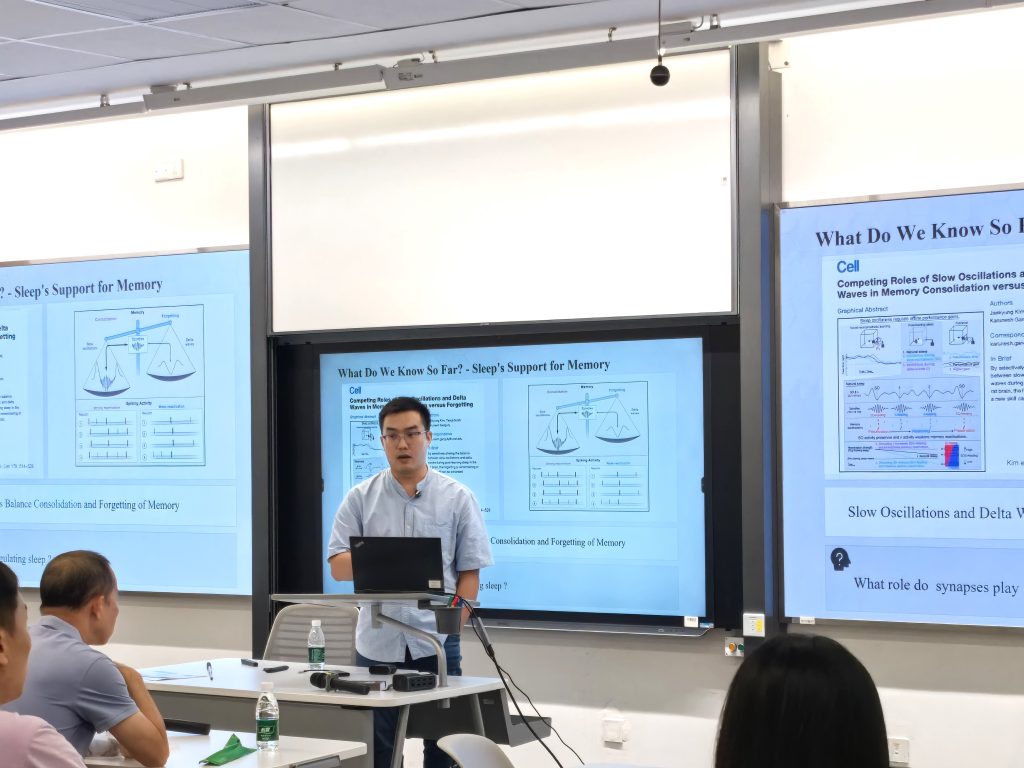
On August 19, the Brain and Intelligence Lunch Seminar NO.43was successfully held. This session featured Dr. Zhifang Li, a visiting scholar at the Brain and Intelligence Research Institute supervised by Prof. Jun Xia, who presented a talk entitled “Sleep-driven shedding of neuroligin-2 controls forgetting”.
While sleep is widely recognized for its role in memory consolidation, the molecular mechanisms by which sleep regulates forgetting have remained elusive. Neuroligin-2 (NL2) is a core organizer of inhibitory synapses, yet whether it is dynamically regulated and how such regulation impacts sleep and memory have been unknown.
Dr. Zhifang LI reported a breakthrough discovery: NL2 undergoes constitutive ectodomain shedding in the mouse brain at the LGPRAY motif (aa658-663), mediated by MMP3/MMP9 and potentiated by GABAA receptor activation. To probe its physiological function, the team generated a knock-in mouse (NL2 Δ/Δ) in which the LGPRAY cleavage site is mutated, rendering NL2 resistant to shedding. These mutant mice exhibit NL2 accumulation at inhibitory synapses, enhanced GABAA receptor clustering, and increased mIPSC amplitude and frequency, indicating hyper-stabilized inhibition.
Remarkably, NL2 Δ/Δ mice show profound impairment of slow-wave sleep—reduced SWA power, density, amplitude, and slope—and display accelerated forgetting of fear memories. Critically, sleep deprivation enhances NL2 shedding and accelerates forgetting in wild-type mice, but this effect is completely abolished in mutants, demonstrating that sleep deprivation-induced forgetting specifically requires NL2 cleavage at the LGPRAY site.
Based on these findings, Dr. LI proposed a novel framework: sleep-driven NL2 shedding serves as a homeostatic “resetting” mechanism that tunes inhibitory synapse dynamics, coupling sleep quality to forgetting. NL2 shedding is thus defined as a previously unrecognized molecular switch linking sleep to memory persistence, offering a fresh perspective on how sleep shapes memory.
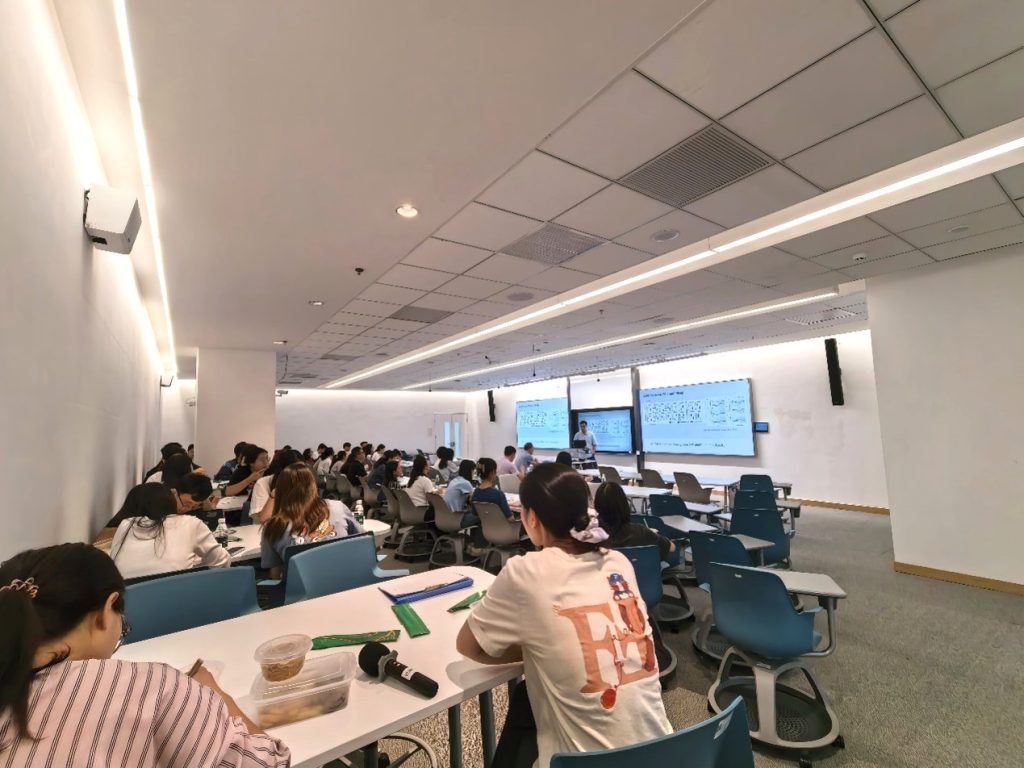
The Brain and Intelligence Seminar aims to promote subject integration and in-depth exchanges in the fields of brain science and artificial intelligence and create a relaxed and open academic exchange atmosphere for teachers and students to jointly discuss the cutting-edge scientific trends of brain and intelligence. We look forward to more experts, scholars and young talents joining us to jointly promote the prosperity and development of frontier fields related to brain and intelligence.