BSBE Forum Brain and intelligence Seminar
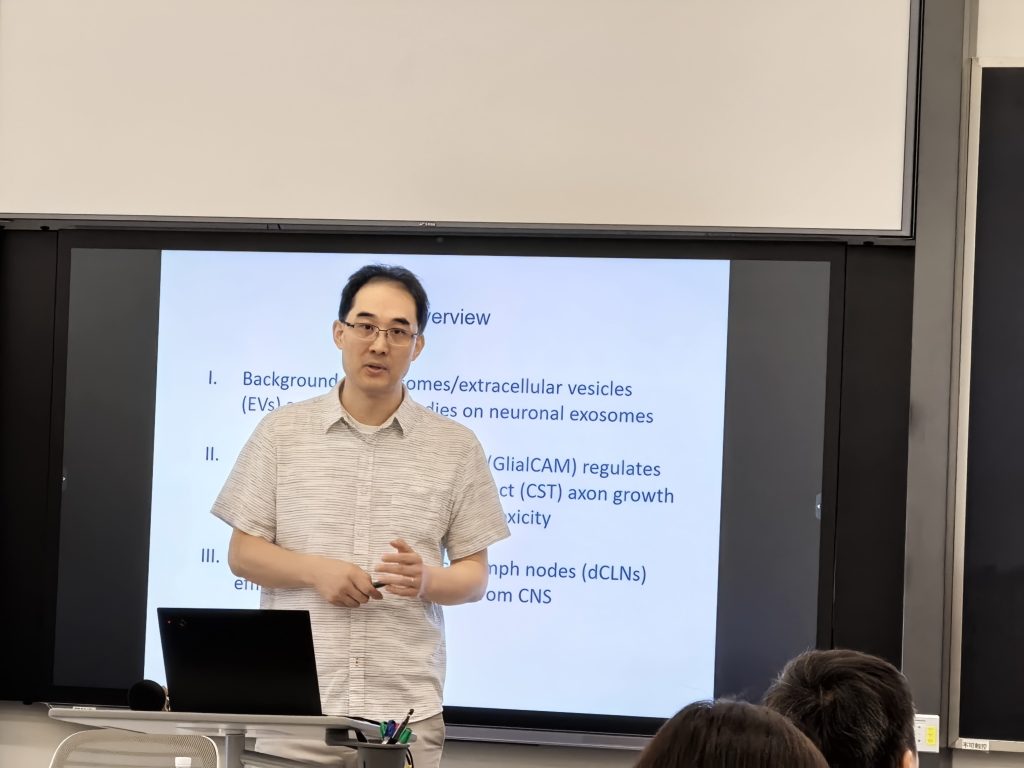
On 02 September 2026, the 1st BSBE Forum Brain and intelligence Seminar was successfully held. Hosted by Prof. Min TIAN, this session featured Prof. Yongjie YANG from Tufts University School of Medicine, who presented a talk entitled Extracellular vesicle-mediated astrocyte to neuron signaling in CNS development and neurodegeneration.
How do astrocytes and neurons communicate to precisely regulate CNS development and function? How does the disruption of this communication contribute to the pathogenesis of neurodegenerative diseases? These are central questions in neuroscience. In recent years, extracellular vesicles—particularly exosomes—have emerged as a key pathway mediating glial-neuronal communication. However, how astrocytes regulate neuronal development through secreted exosomes, and how reactive astrocyte-derived exosomes impact neuronal survival, remain critical unanswered questions.
In this seminar, Dr. Yang addressed these questions by presenting a series of breakthrough discoveries from his laboratory.
First, exosome-mediated bidirectional astrocyte-neuron communication and its role in development. On one hand, neuron-derived exosomes transfer miR-124 to astrocytes, suppressing downstream target genes and regulating the expression of the astrocytic glutamate transporter GLT1, revealing a novel mechanism by which neurons “remotely control” astrocyte function through exosomal miRNAs. On the other hand, astrocyte-derived exosomes, through their surface adhesion protein GlialCAM (HepaCAM), regulate axon growth and dendritic spine formation of cortical pyramidal neurons during early postnatal development, expanding the functional repertoire of exosomes from “molecular carriers” to “signaling ligands.”
Second, functional dysregulation of reactive astrocyte-derived exosomes in neuroinflammation and neurodegenerative diseases, and their translational potential. Under neuroinflammatory conditions such as ALS, inflammatory cytokines alter the cargo and function of astrocytic exosomes, compromising their protective capacity against glutamate-induced excitotoxicity and exacerbating motor neuron damage. In addition, the team systematically investigated how astrocytic exosomes efflux from the CNS and enter peripheral circulation, opening new avenues for using peripheral biomarkers to monitor CNS pathological states.
Collectively, these findings demonstrate that exosome-mediated astrocyte-to-neuron communication plays an indispensable and bidirectional role in CNS development, homeostasis, and disease progression. Dr. Yang's work not only deepens our understanding of glial cell biology but also provides new theoretical foundations and potential targets for the early diagnosis and intervention of neurodegenerative diseases including Alzheimer's disease and ALS.
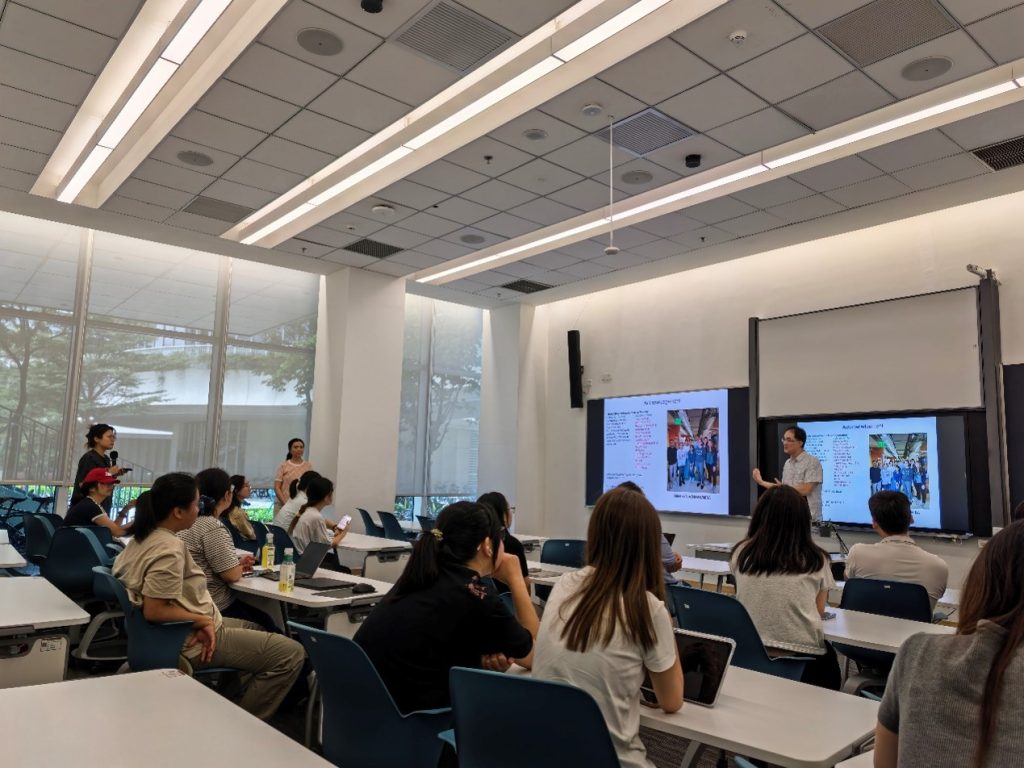
The talk was followed by an engaging Q&A session, with lively discussions between the speaker and the audience.
The BSBE Forum aims to foster interdisciplinary exchange in bioscience and biomedical engineering, providing faculty and students with an open platform to discuss cutting-edge research. We look forward to welcoming more experts and scholars to join us in advancing the field.