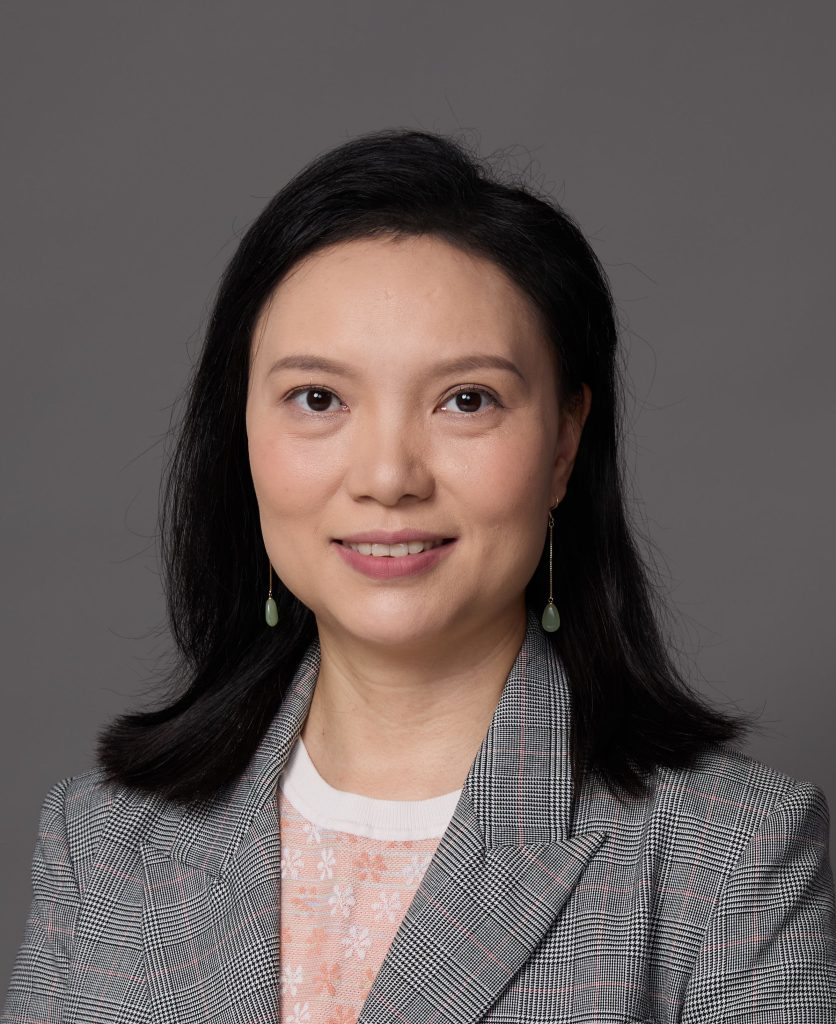
PhD in Life Science
Hong Kong University of Science and Technology, 2018
Thrust of Bioscience and Biomedical Engineering
https://scholar.google.com/citations?user=bCQH8WcAAAAJ&hl=en
Biography
Dr. Tian is an Assistant Professor in the Bioscience and Biomedical Engineering (BSBE) Thrust within the Systems Hub at The Hong Kong University of Science and Technology (Guangzhou), with a joint appointment at the Brain and Intelligence Research Institute. She earned her Bachelor of Science from the West China Medical Center of Sichuan University, followed by a Master of Science from the Peking University Health Science Center. Dr. Tian completed her Ph.D. at The Hong Kong University of Science and Technology under the supervision of Professor Nancy Y. Ip. She then pursued postdoctoral training in the laboratory of Professor S. Thomas Carmichael at the David Geffen School of Medicine, University of California, Los Angeles (UCLA), where she subsequently advanced to the position of Assistant Project Scientist.
Research
Interests
Dr. Tian’s research centers on elucidating the molecular, cellular, and circuit-level mechanisms underlying injury and repair in neurodegenerative diseases including different types of dementia. By integrating human and model animal cell-type-specific transcriptomics, bioinformatics, behavior tests, and in vivo gene manipulation techniques, Dr. Tian has identified key intercellular signaling pathways between endothelial and glial cell subsets involved in neurovascular dysfunction and repair. Her work has revealed multiple promising therapeutic targets, including the Serpine2-Lrp1 and CD39-A3AR signaling axes, which she has functionally validated through approaches such as small-molecule drug development, gene therapy, and high throughput screening platforms. Beyond mechanistic discovery, Dr. Tian actively advances translational research, collaborating with medicinal chemists and clinicians to drive the development of novel therapeutics for dementia.
Tian M * (Corresponding author), Llorente IL, Carmichael ST *. Protocol for mouse vascular dementia model and evaluation of progressive tissue damage. Star Protocols (2026). * Corresponding author
Tian M, Kawaguchi R, Shen Y, Machnicki M, Villegas NG, Cooper DR, Cai Y, Montgomery N, Haring J, Lan R, Yuan AH, Williams CK, Magaki S, Vinters HV, Zhang Y, De Biase LM, Silva AJ, Carmichael ST. Deconstructing the intercellular interactome in vascular dementia with focal ischemia for therapeutic applications. Cell (2025) DOI: 10.1016/j.cell.2025.06.002
Li J, Godoy MI, Lu Y, Zhang AJ, Diamante G, Rathbun E, Tian M, Ahn IS, Cebrian-Silla A, Alvarez-Buylla A, Yang X, Novitch BG, Carmichael ST, Zhang Y. Molecular regulation of the time span of neurogenesis and the postnatal disappearance of embryonic radial glia. Nature Communications (2025) 16, 6659. DOI: 10.1038/s41467-025-60895-y
Mitroi DN, Tian M, Kawaguchi R, Lowry WE, Carmichael ST. Single-nucleus transcriptome analysis reveals disease- and regeneration-associated endothelial cells in white matter vascular dementia. Journal of Cellular and Molecular Medicine (2022) 00:1-13. DOI: 10.1111/jcmm.17315
Shen Y, Zhou M, Cai D, Filho DA, Fernandes G, Cai Y, Sousa A, Tian M, Kim N, Lee J, Necula D, Zhou C, Li S, Salinas S, Liu A, Kang X, Kamata M, Lavi A, Huang S, Silva T, Heo WD, Silva AJ. CCR5 closes the temporal window for memory linking. Nature (2022).
Lau J#, Tian M#, Shen Y, Lau SF, Fu WY, Fu AKY, Ip Nancy. Melanocortin receptor activation alleviates amyloid pathology and glial reactivity in an Alzheimer’s disease transgenic mouse model. Scientific Reports (2021). 11:4359. # Co-first authors.
Shen Y, Tian M, Zheng YQ, Fei G, Fu AKY, Ip Nancy. Stimulation of the hippocampal POMC/MC4R circuit alleviates synaptic plasticity impairment in an Alzheimer’s disease model. Cell Reports (2016). 17(7):1819-31.
Li XW, Morinaga O, Tian M, Uto T, Yu J, Shang MY, Wang X, Cai SQ, Shoyama Y. Development of an Eastern blotting technique for the visual detection of aristolochic acids in Aristolochia and Asarum species by using a monoclonal antibody against aristolochic acids I and II. Phytochemical Analysis (2013). 24(6):645-53.
Shang MY, Tian M, Tanaka H, Li XW, Cai SQ, Shoyama Y. Quality control of traditional Chinese medicine by monoclonal antibody method. Current Drug Discovery Technologies (2011). 8(1):60-5.
Li YL, Tian M, Yu J, Shang MY, Cai SQ. Studies on morphology and aristolochic acid analogue constituents of Asarum campaniflorum and a comparison with two official species of Asari radix et rhizoma. Journal of Nature Medicines (2010). Oct;64(4):442-51
Tian M, Tanaka H, Shang MY, Karashima S, Chao Z, Wang X, Cai SQ, Shoyama Y. Production, Characterization of a Monoclonal Antibody against Aristolochic Acid-II and Development of Its Assay System. American Journal of Chinese Medicine (2008). 36 (2): 425-36