Brain and Intelligence Seminar NO.36

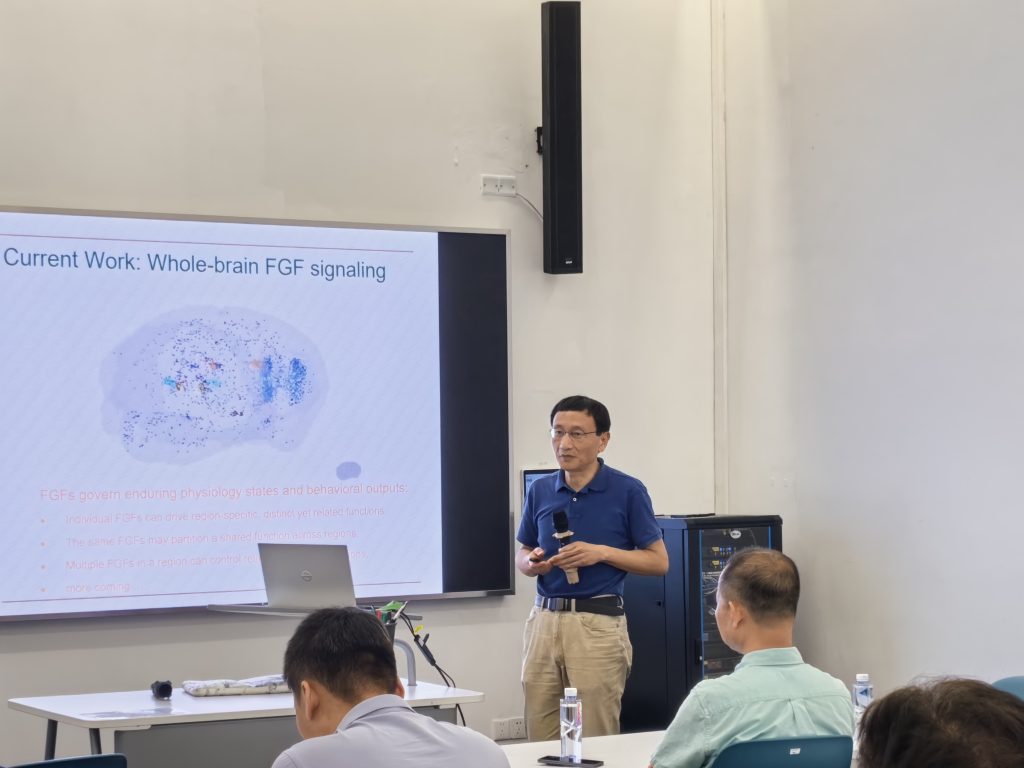
On April 1st, the 36th Brain and Intelligence Seminar was successfully held. This session specially invited Professor J. Julius Zhu from Wenzhou Medical University as the speaker. Professor Zhu delivered a talk titled “Attentional Neurons and Circuits”. The report systematically elucidated how cortical neurons nonlinearly amplify salient information through a coincidence detection mechanism, as well as the critical roles of inhibitory circuits and neuromodulatory modules in attention regulation and the treatment of neuropsychiatric disorders.
Prof. Zhu’s lab has achieved significant progress in understanding the neural mechanisms of attention selection, a fundamental process for attention-demanding cognitive functions such as attention, expectation, perception, and working memory. They developed a simultaneous dual–sexdecuple in vitro and in vivo patch-clamp recording technique and discovered that cortical neurons employ a coincidence detection mechanism to nonlinearly amplify salient information. Moreover, cortical inhibitory circuits can either suppress or disinhibit this coincidence detection mechanism, suggesting that cortical neurons, synapses, and circuits work together to filter out incoming “noise” and enhance the processing of behaviorally relevant signals. Recently, they created a genetically encoded sensors-based image analysis program (GESIAP), enabling the first nanoscopic visualization of neuromodulatory transmission ex vivo and in behaving animals. Quantal analysis of synaptic events at single release sites has uncovered unexpected transmission properties, revealing distinct roles of different neuromodulatory modules in controlling attention and other behaviors.
These findings not only advance our understanding of attentional mechanisms but also suggest new effective treatments for neuropsychiatric disorders, including Alzheimer’s disease, Parkinson’s disease, addiction, and depression.
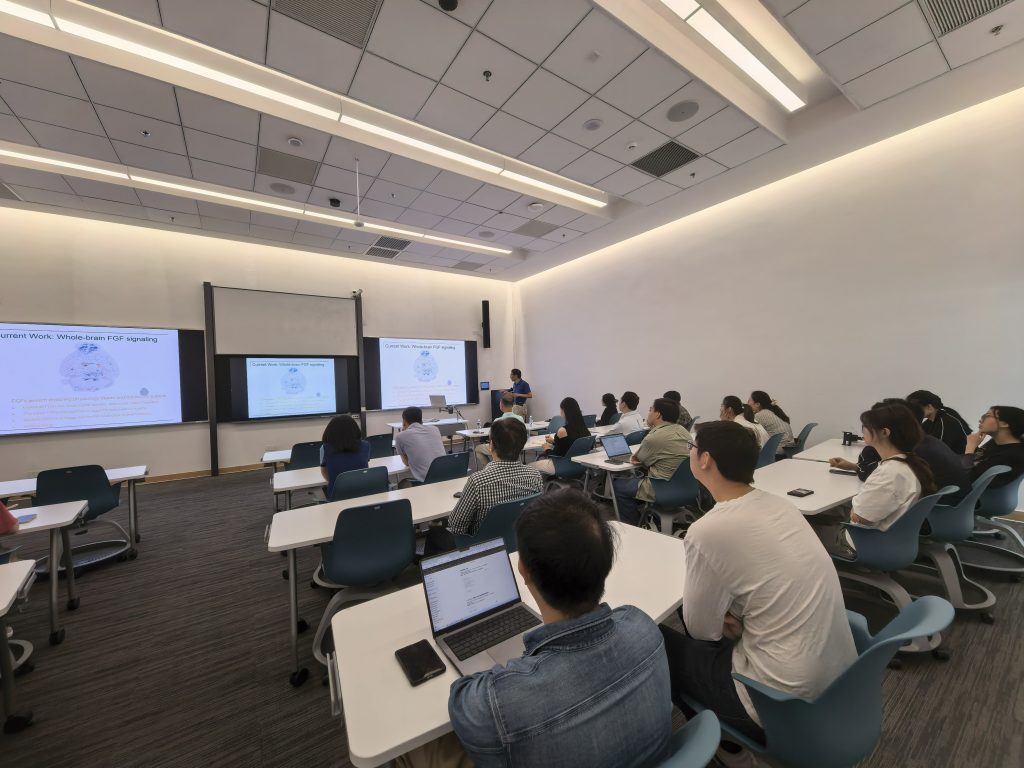
The Brain and Intelligence Seminar aims to promote subject integration and in-depth exchanges in the fields of brain science and artificial intelligence and create a relaxed and open academic exchange atmosphere for teachers and students to jointly discuss the cutting-edge scientific trends of brain and intelligence. We look forward to more experts, scholars and young talents joining us to jointly promote the prosperity and development of frontier fields related to brain and intelligence.