Brain and Intelligence Seminar NO.42

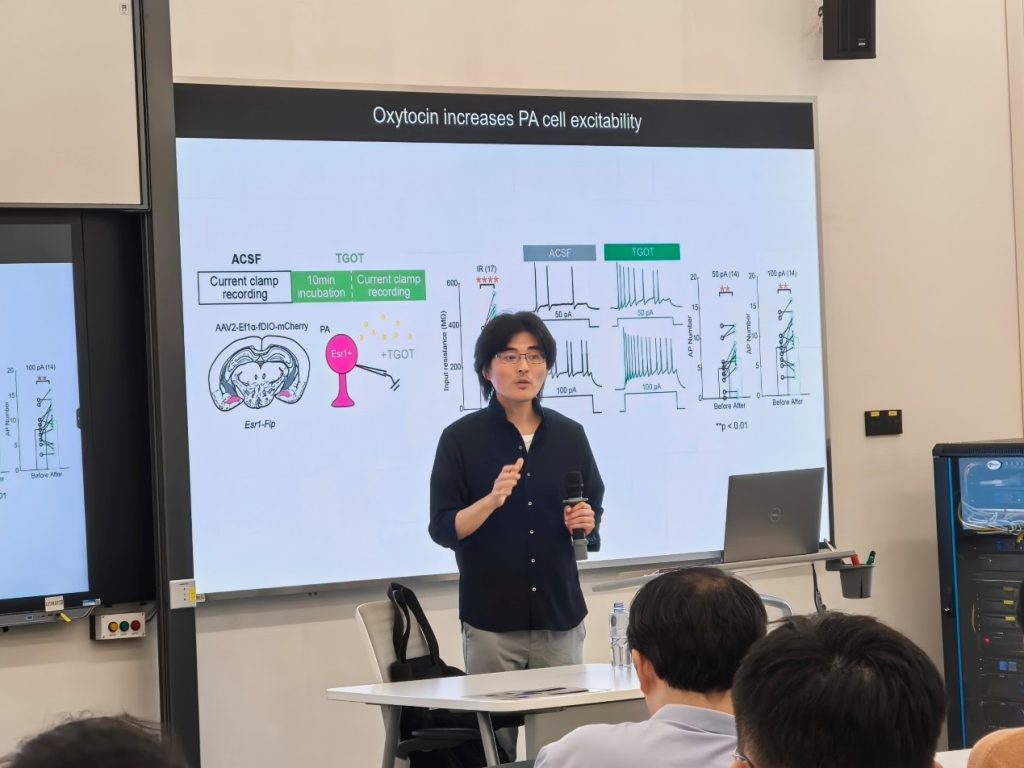
On July 22, the Brain and Intelligence Seminar NO.42 was successfully held. This session featured Dr. Takashi Yamaguchi, Postdoctoral Fellow at the Institute for Translational Neuroscience, New York University, who presented a talk entitled “Maternal Brain Mechanisms Underlying Protective Aggression.”
Based on these findings, Dr. Yamaguchi proposed a two-step hormonal control model: pregnancy-associated sex hormone surges remodel the aggression circuit, while lactation-associated neuropeptide signals (particularly oxytocin) gate circuit output in response to the need to protect offspring. This study reveals how multiple forms of plasticity in a defined neural circuit collectively implement the adaptive, need-based control of maternal aggression, providing a critical mechanistic framework for understanding reproductive state-dependent behavioral switching.
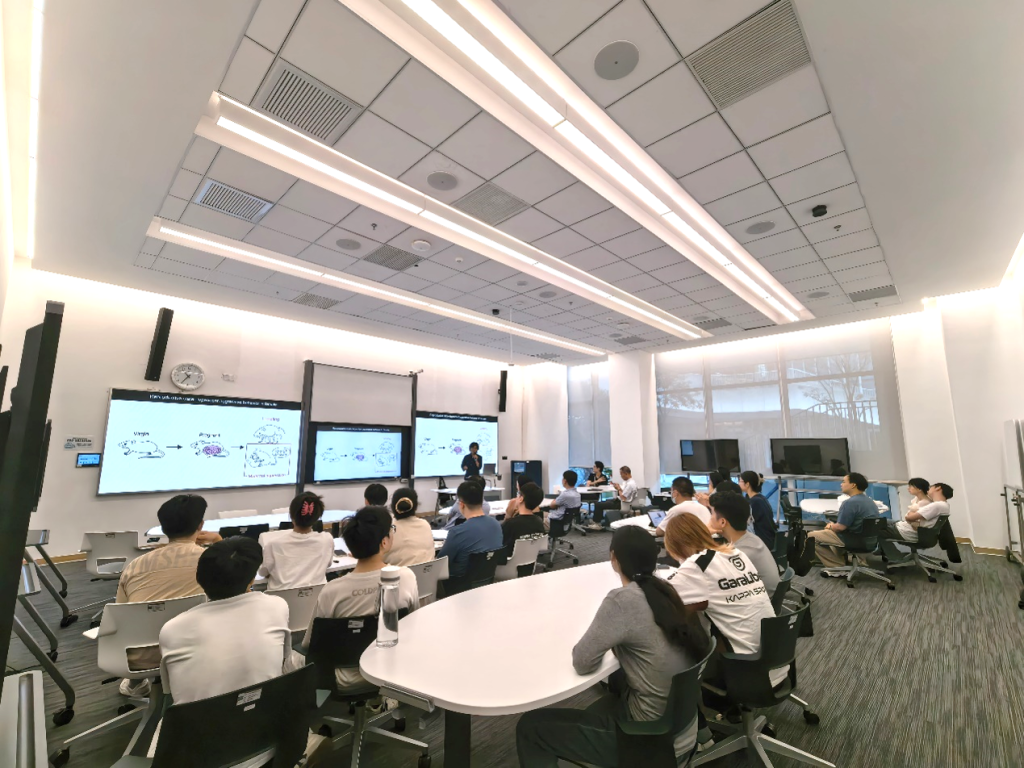
The Brain and Intelligence Seminar aims to promote subject integration and in-depth exchanges in the fields of brain science and artificial intelligence and create a relaxed and open academic exchange atmosphere for teachers and students to jointly discuss the cutting-edge scientific trends of brain and intelligence. We look forward to more experts, scholars and young talents joining us to jointly promote the prosperity and development of frontier fields related to brain and intelligence.