Brain and Intelligence Lunch Seminar

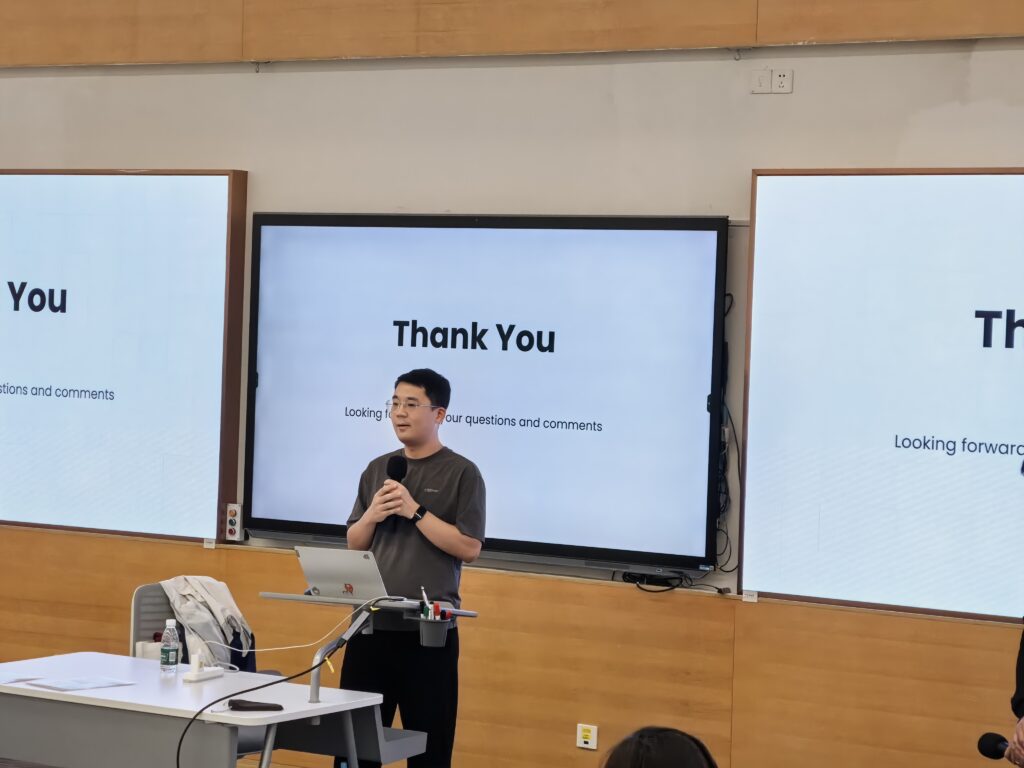
On November 11, to further inspire students' enthusiasm for scientific research and enhance their academic communication skills, the Brain and Intelligence Research Institute launched a student-led seminar series. In this session, Phd student Yaxiong FANG, from the research team of Assistant Professor Zhuoyi liang, served as the speaker. He presented her research titled “Decoding Disease and Defense: Machine Learning–Guided Antibody Discovery via Immune Receptor Sequencing” attracting approximately 60 faculty members and students.
Immune receptor repertoires contain information about both immune-mediated pathology and protective host responses, yet translating this information into functionally validated antibodies remains difficult. Yaxiong FANG presented a unified computational–experimental framework that integrates immune receptor sequencing, single-cell profiling, and machine learning to connect repertoire signatures with cellular states and prioritize antibody candidates. Rather than treating computational predictions as stand-alone evidence, the framework evaluates candidate specificity and function through orthogonal assays.
The speaker described two complementary applications of this framework.Repertoire analysis identifies disease-associated immune clones and enables investigation of their relevance to patient stratification and tissue pathology. During recovery from acute infection, the same repertoire-to-function strategy links B-cell states with antibody discovery, yielding candidates with protective functional activity. The talk noted that this common framework can support the study of antibodies contributing to host defense, connecting immune monitoring, mechanistic investigation, and early-stage antibody development, while underscoring the value of rigorous experimental validation across diverse clinical settings.
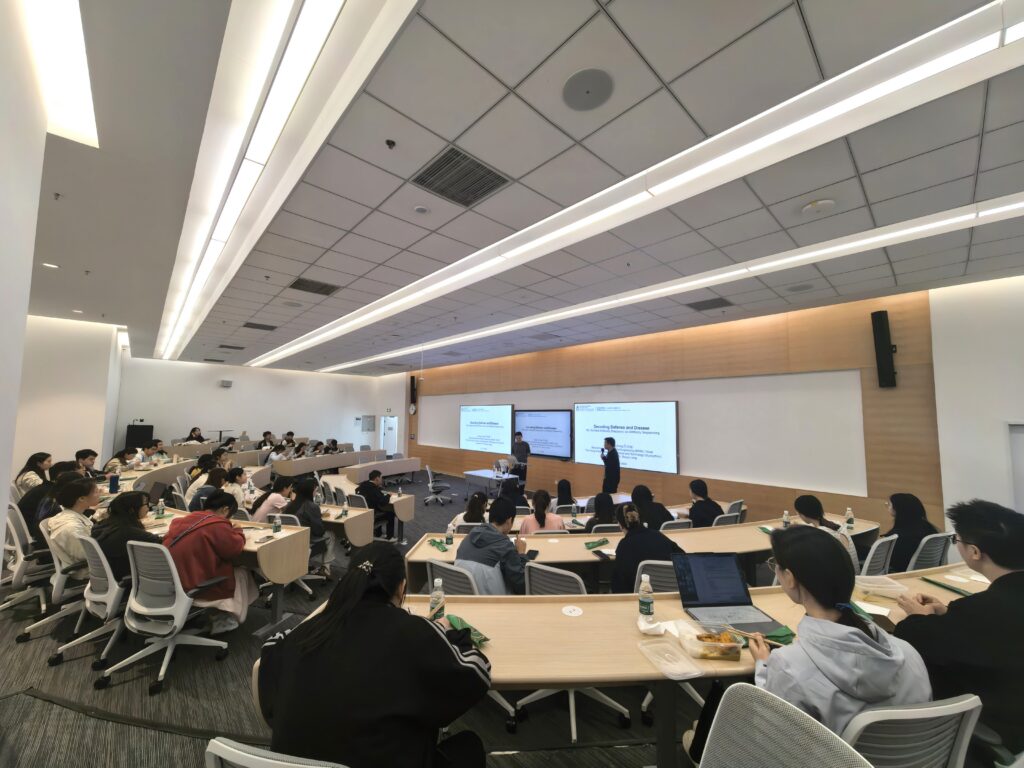
The Brain and Intelligence Lunch Seminar aims to promote subject integration and in-depth exchanges in the fields of brain science and artificial intelligence and create a relaxed and open academic exchange atmosphere for teachers and students to jointly discuss the cutting-edge scientific trends of brain and intelligence. We look forward to more experts, scholars and young talents joining us to jointly promote the prosperity and development of frontier fields related to brain and intelligence.

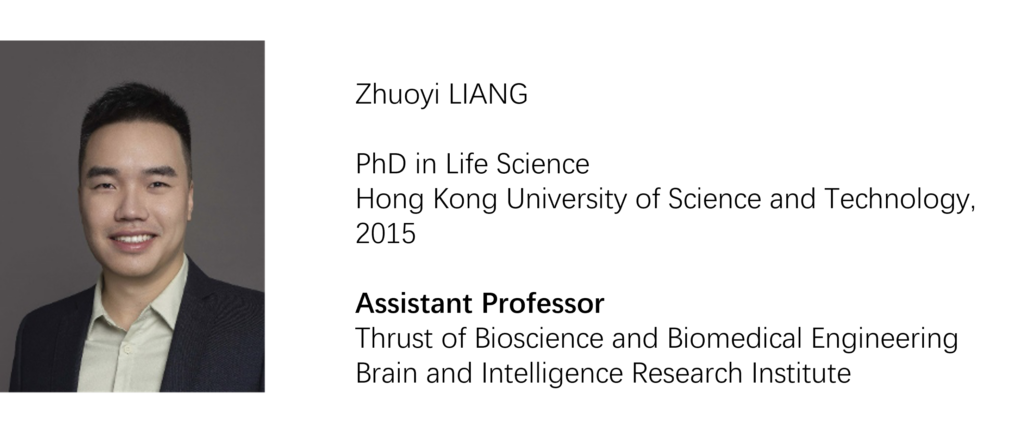
About Lab
Dr. Liang is an assistant professor in Bioscience and Biomedical Engineering (BSBE) Thrust, Systems Hub, HKUST (GZ), and in The Brain and Intelligence Research Institute. Dr. Liang received his bachelor’s degree from Shanghai Jiao Tong University and his Ph.D. degree from The Hong Kong University of Science and Technology with Dr. Nancy Y. Ip. He joined Dr. Frederick W. Alt’s laboratory at Boston Children’s Hospital as a postdoc and became an instructor of Harvard Medical School. Dr. Liang’s major research interests focus on the mechanisms of genomic instability in mammalian cells. He has developed new high throughput genomics and animal modeling approaches to study mechanisms that promote and prevent genetic translocations which can lead to cancers and other diseases.